
Water Efficiency Project
Jenda and Chilumba Water Supply and Sanitation Project
NRWB implemented the Water Supply and Sanitation Project for Jenda in Mzimba and Chilumba in Karonga. The project aimed at expanding and rehabilitating Jenda and Chilumba water supply schemes to meet its current and future water supply demand by improve supply and access to potable water, and improve sanitation for the residents. The main project activities were:
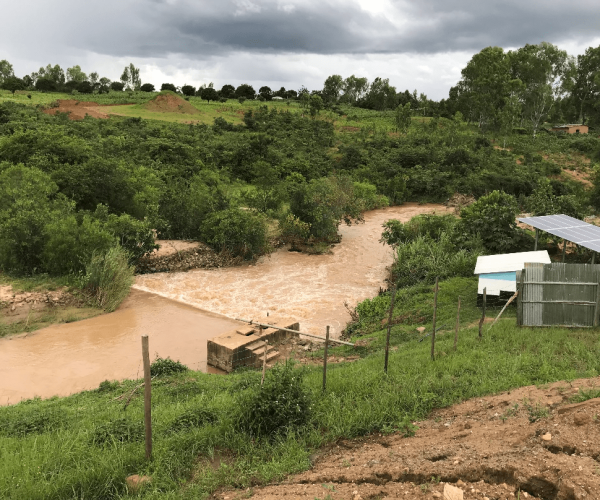
- Construction of two river intake weirs across Kamwankhu/Kabwazi Rivers Confluence (25 m long and 5 m high) and across Kavikhwawa River (200 m long and 25 m high)
- Installation of two raw water pipelines for a total distance of 11.5km
- Construction of a water treatment plant
- Construction of service tanks
- Installation of a 120 Km long distribution pipelines
- Installation of a 30 Kw solar power supply system at the treatment plant and office building
- Construction of a restricted solid waste dumpsite
Chilumba Water Supply Scheme
- Construction of a 13,109 m3/day capacity water treatment plant
- Construction of three service reservoir tanks
- Installation of an 8.3 Km long pumping mains
- Installation of 180 km distribution pipelines
- Installation of a 511 Kw solar power supply system at treatment plant (300 Kw), Mphiri tank (20 Kw), Chilumba booster (170 Kw), Vinthukutu tank (20 Kw), Hara booster (21 Kw) and Sangilo tank (10 Kw)
- Construction of a restricted solid waste dumpsite
Water Efficiency Project (Two River Intake Structures)
The NRWB, with support from the European Investment Bank (EIB), implemented the Water Efficiency Project with the aim of increasing reliable water supply for Mzuzu city and Ekwendeni township. This component of the project involved construction of two intake weirs across the Lunyangwa River, one at the Mzuzu Water Treatment Plant (WTP) and the other at the Ekwendeni WTP. Initially, the existing weirs were temporary structures and were made of sandbags to intercept water that was then abstracted through pumping to the water treatment works. This resulted in the significant loss of water by passing around or under the weir. This necessitated the NRWB to construct the new intake weirs with reinforced concrete to enable increased water abstraction and increasing the supply capacity by about 95%. The total costs for implementing the Ekwendeni and Mzuzu weir projects were estimated at €165,000.00 and €65,000.00 respectively.
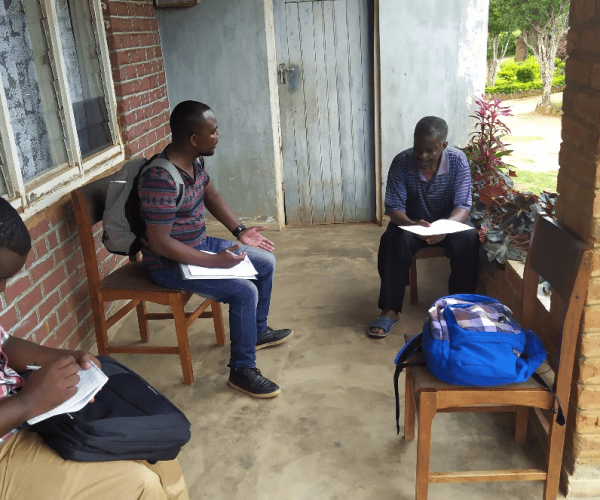
The NRWB hired a consultant to conduct an ESIA for the proposed project in 2018. Due to come challenges, the project was not implemented as the ESIA did not address some issues with other stakeholders. In 2021, NRWB hired Matex International to update the ESIA by addressing the issues that posed challenges on the implementation of the project.