


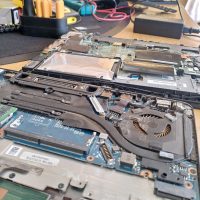
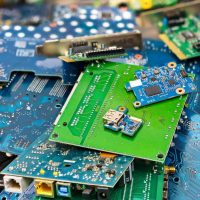
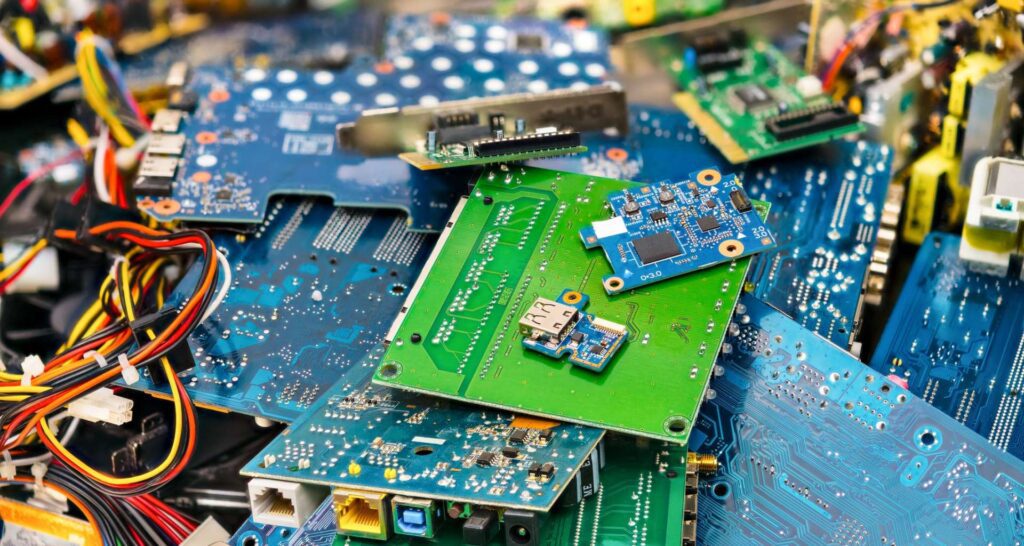
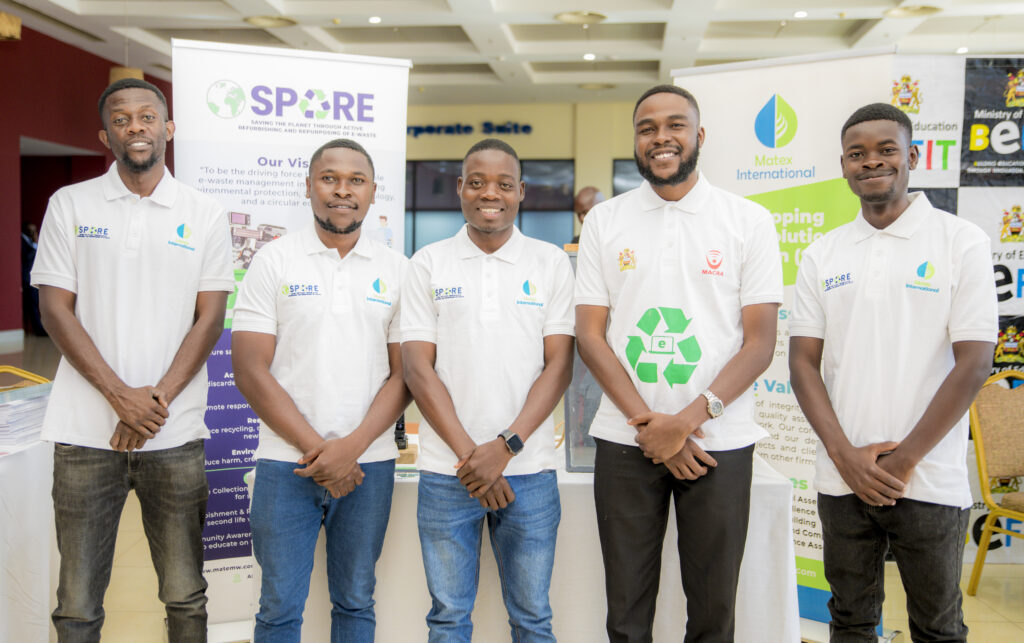
Matex International established an electrical and electronic waste (e-waste) storage, refurbishing, and repurposing facility in Lilongwe, area 38, to address the growing e-waste burden in Malawi.
Incorporated under the Business Names Registration Act of Malawi (CAP 46.02) and registered with the Malawi Environmental and Protection Authority (MEPA). Matex is dedicated to providing environmental and social solutions to communities,
At SPARE, our expert consultants support companies with strategic advice and help them develop sustainable circular solutions that deliver the greatest environmental and business value
We can collect your used or end-of-life electronics and reuse them to benefit your business and the environment.
Sign up for the latest news and updates on E-Waste and Climate Mitigation
*This email newswire is managed by the Matex International Ltd, who are lead partners in the S.P.A.R.E Project, and you’ll receive occasional updates from them.
We will not overload your inbox or share your email address with any other organizations. You can unsubscribe at any time.
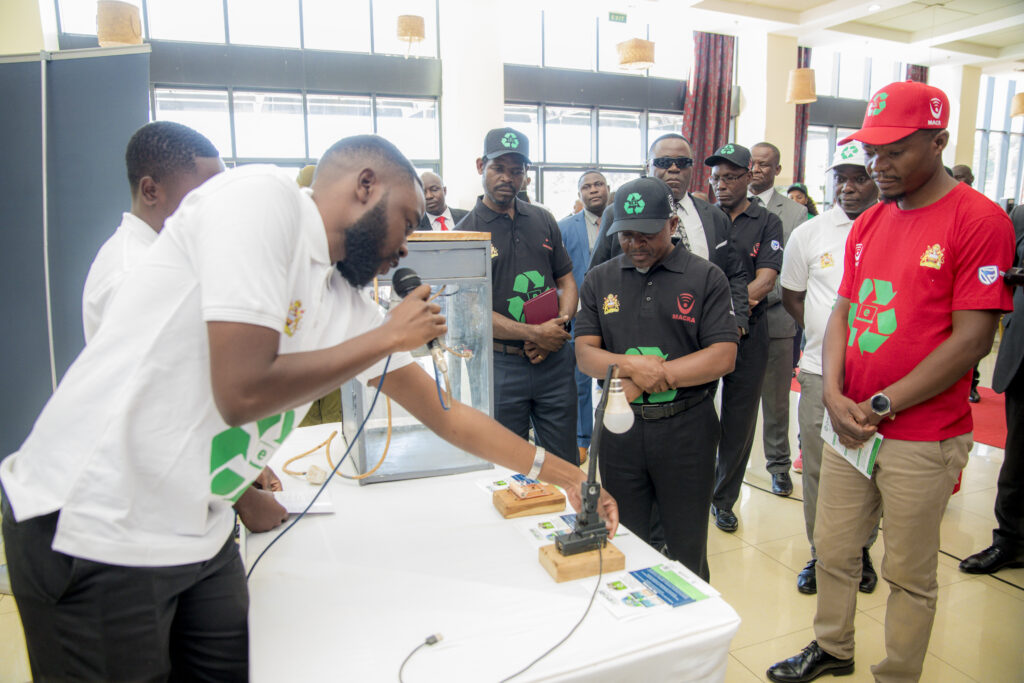
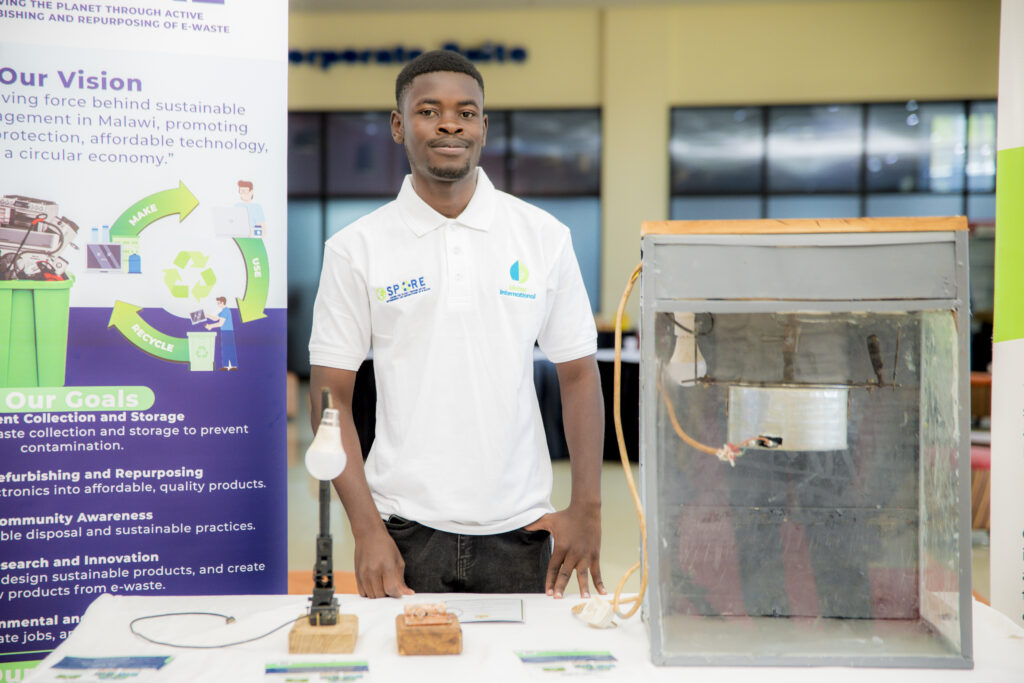
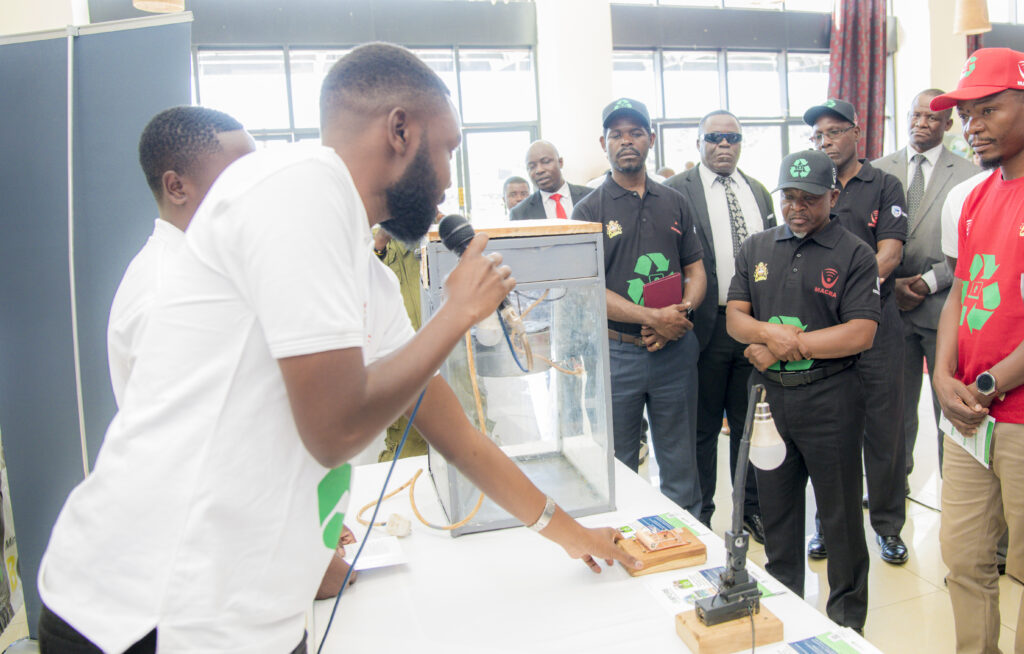
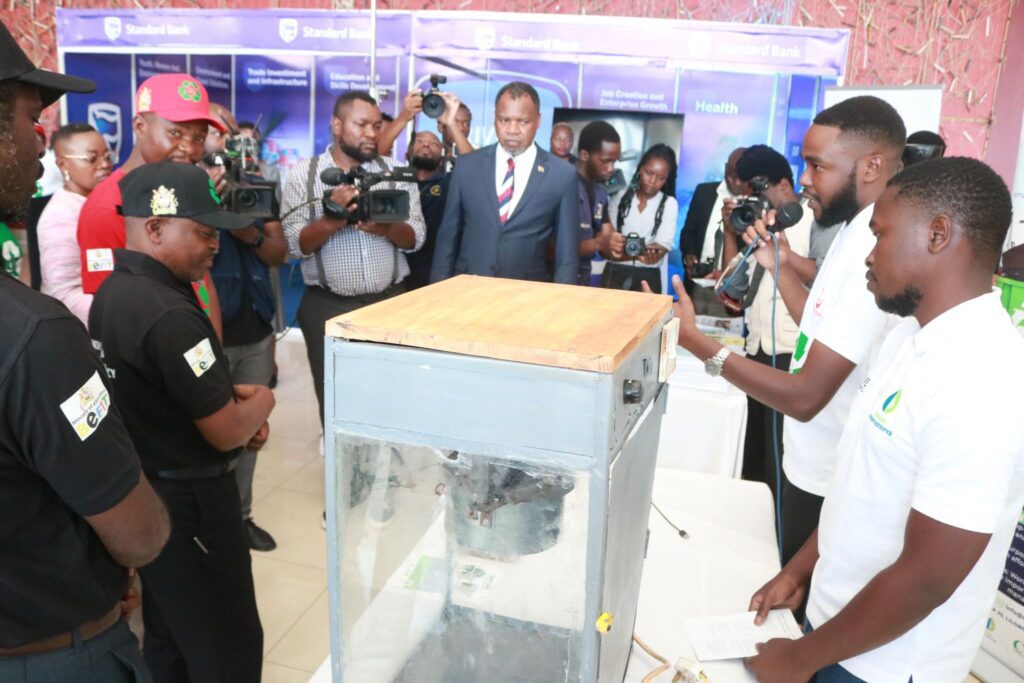
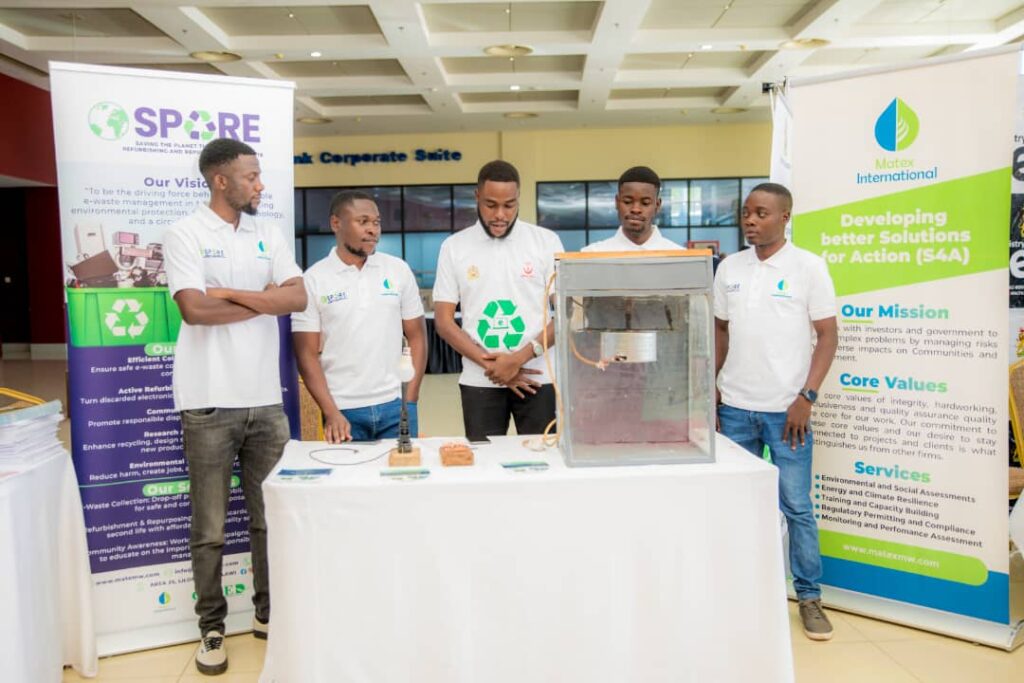
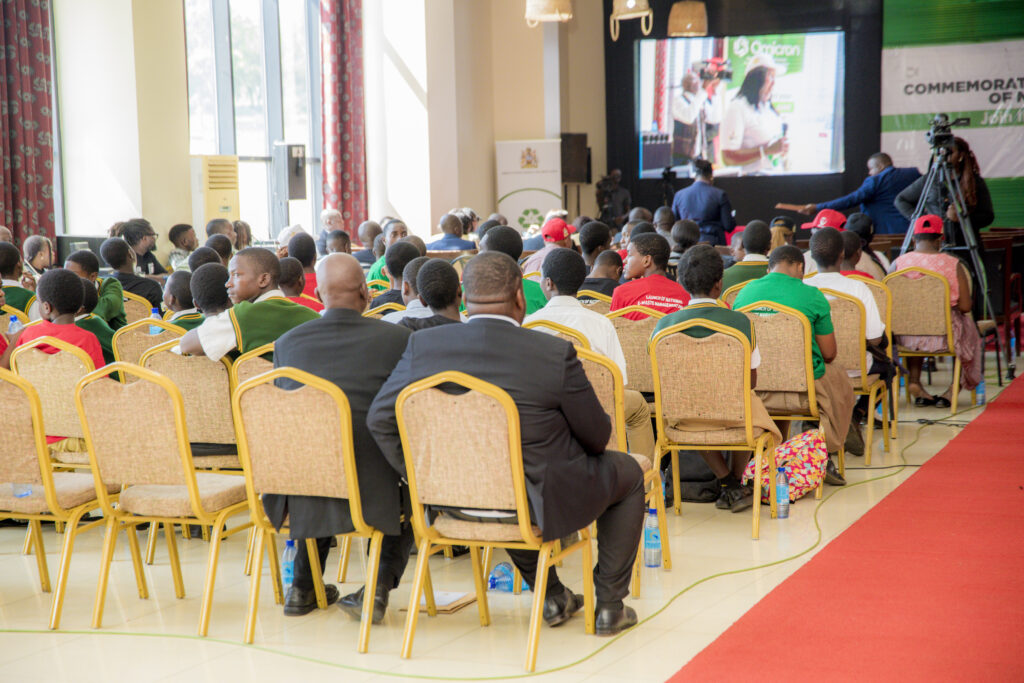
SPARE Presentation during Malawi’s inaugural National E-Waste Day
SPARE Business Model
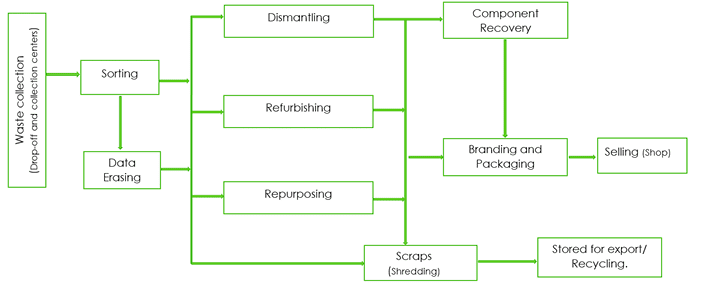
Our business model follows a circular value chain approach that transforms locally sourced electronic waste into valuable products through a series of integrated stages. This end-to-end
model ensures maximum resource recovery, environmental protection, and economic value creation. The process is illustrated in Figure below.
While recycling focuses on material recovery, repurposing aims to extend the life of electronic components by giving them a new function or application. Repurposing can take various forms, from refurbishing devices to creative upcycling projects
Once collected, the e-waste is sorted and categorized based on different criteria such as device type, material composition, and potential for recycling. This step helps identify which devices can be refurbished or reused and which ones need to be processed for recycling.
Sign up for the latest news and updates on E-Waste and Climate Mitigation
*This email newswire is managed by the Matex International Ltd, who are lead partners in the S.P.A.R.E Project, and you’ll receive occasional updates from them.
We will not overload your inbox or share your email address with any other organizations. You can unsubscribe at any time.
SPARE Presentation during Malawi’s inaugural National E-Waste Day
SPARE Business Model
Our business model follows a circular value chain approach that transforms locally sourced electronic waste into valuable products through a series of integrated stages. This end-to-end
model ensures maximum resource recovery, environmental protection, and economic value creation. The process is illustrated in Figure below.
This what it says actually:
Our business model follows a circular value chain approach that transforms locally sourced electronic waste into valuable products through a series of integrated stages. This end-to-end
model ensures maximum resource recovery, environmental protection, and economic value creation. The process is illustrated in Figure below.
SPARE Business Model
Our business model follows a circular value chain approach that transforms locally sourced electronic waste into valuable products through a series of integrated stages. This end-to-end
model ensures maximum resource recovery, environmental protection, and economic value creation. The process is illustrated in Figure below.
SPARE Business Model
Our business model follows a circular value chain approach that transforms locally sourced electronic waste into valuable products through a series of integrated stages. This end-to-end
model ensures maximum resource recovery, environmental protection, and economic value creation. The process is illustrated in Figure below.
We work with Investors and the Government to solve complex problems by managing risks and adverse impacts on Communities and Environment.